

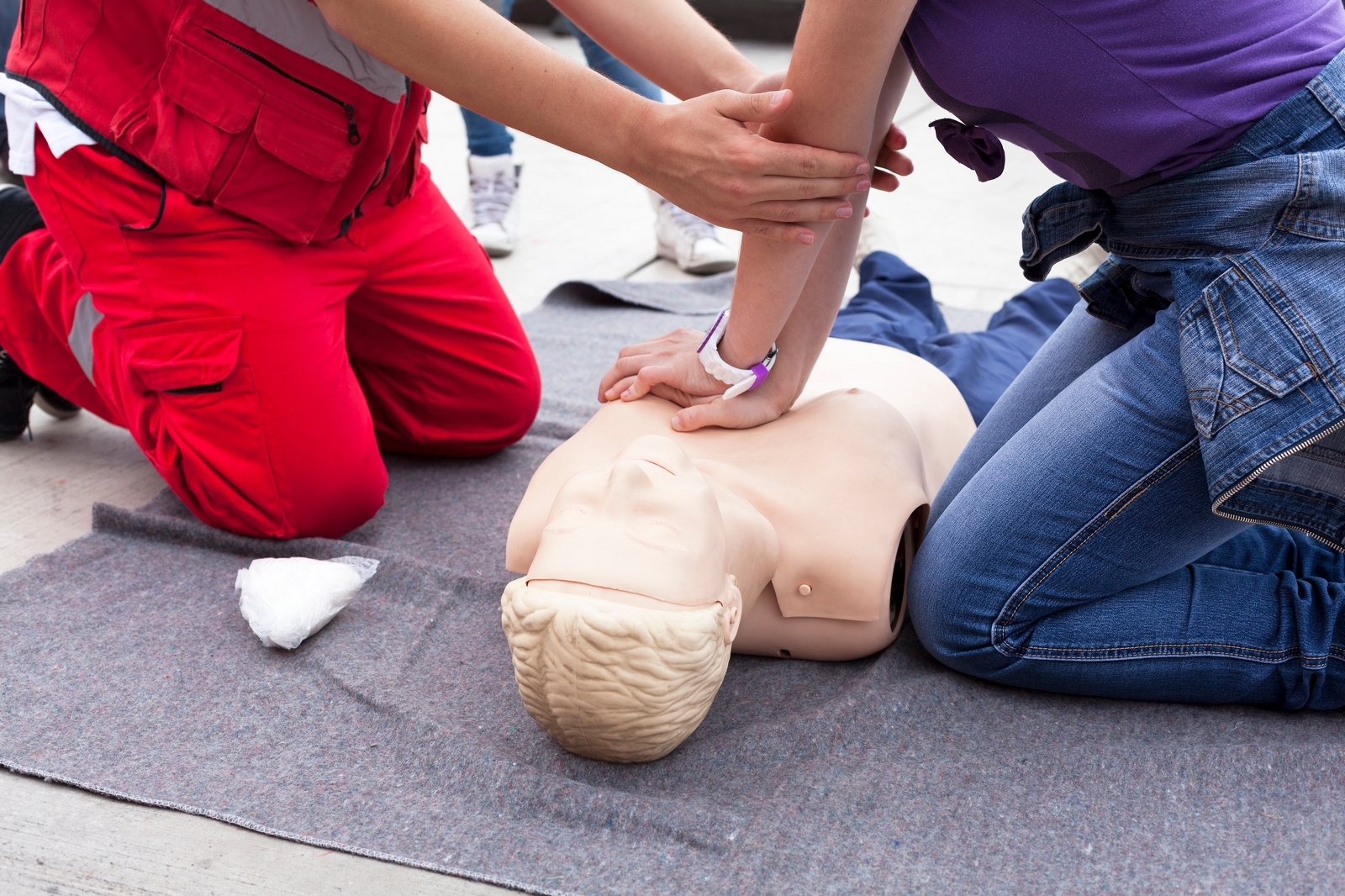
Emergency First Aid At Work

Are You Looking To Undertake An Emergency First Aid At Work Course?

If so, Wayside Transport can help as we offer a variety of first aid courses all of which are HSE approved. You can read more about each of these course options below. Alternatively, if you have any questions, please feel free to contact our team today.
Emergency First Aid at Work

The Emergency First Aid at Work course is a one-day programme that has been designed to cover all regulatory requirements. It is an essential qualification for anyone looking to become the designated first aider in their place of employment. This course is the best choice for many candidates, so long as their risk assessment stipulates that only first-aid training that covers emergency protocols is required.

Who is this course aimed at?

This particular first aid course is aimed at individuals looking to train as first aiders in environments that could be considered low-risk. These are usually smaller places of employment that don’t have a particularly large workforce or aren’t engaged in operations which would be considered dangerous.

CPC Accreditable

If the attendee requires us to do so, we can also accredit the seven-hour Driver CPC training.

Emergency First Aid Training Delivered Across Dorset, Hampshire, Wiltshire and Devon

Serving small businesses, self-employed workers and larger organisations, Wayside Transport provides Emergency First Aid at Work training for teams who need a straightforward, one day course across Dorset, Hampshire, Wiltshire and Devon. Our sessions focus on the essential skills needed to respond quickly and effectively in an emergency.

We work with Emergency First Aid learners from Bournemouth, Poole, Southampton, Salisbury, Dorchester, Weymouth and Yeovil, as well as from workplaces throughout the wider Dorset, Hampshire, Wiltshire and Devon areas.

Wherever you are located in the region, you can depend on our trainers for clear, hands-on Emergency First Aid training, from your initial enquiry through to receiving your certificate.

What’s Involved?

All attendees will cover workplace health and safety regulations and be taught the basic life-saving skills that are required to stabilise a patient until medical help arrives. This course covers many different areas, including:

• The Role of the First Aider
• How to Manage an Emergency
• Caring for a Casualty/ Effective Communication
• How to Manage Cases Involving Minor and Severe Bleeding
• Burns
• Caring for Casualties Who Are Unresponsive
• Resuscitation (CPR)
• Seizures in Adults
• Shock
• Choking (Adults)
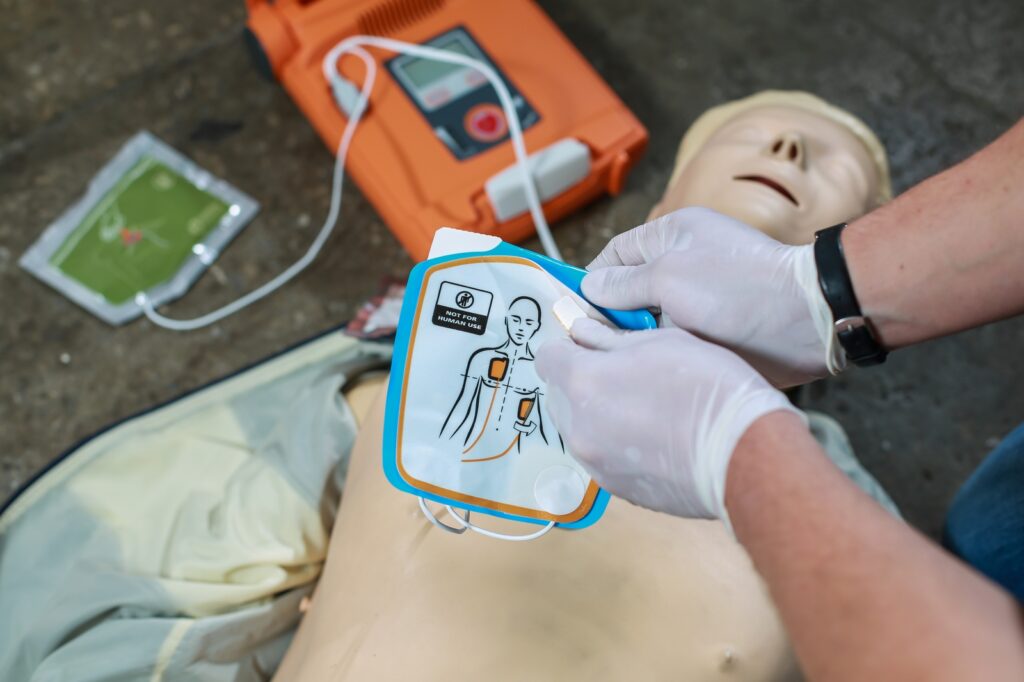
• Defibrillator – Pad Placement/ Prompts/ How to Respond

Get In Touch

Bournemouth

01202 873 911

Hampshire

02380 175 767

Other Services

Defibrillator & CPR First Aid Training

First Aid At Work

Frequently Asked Questions

With over 25 years of experience, Wayside Transport offers a friendly, down-to-earth approach coupled with proven training methods. Our instructors are all registered with the National Register of Instructors, hold DBS certificates, and our first-time pass rates are significantly above the national average. We offer bespoke packages for both individuals and organisations.

Our courses and instructors are fully recognised by the DVSA (Driver & Vehicle Standards Agency) and JAUPT (for Driver CPC). We are members of the SQA (Scottish Qualifications Authority) for ADR certification, are registered on the National Register of LGV Instructors, and are proud partners with organisations including the South Western Ambulance Service and Dorset & Wiltshire Fire Rescue.

Absolutely. We work with organisations of all sizes to deliver outstanding driver training that produces highly skilled, well-prepared and responsible drivers. Our approach covers all necessary requirements to keep your drivers safe and legal. In some cases, training can take place at your premises.

Yes, we have many positive reviews from satisfied customers. Our learners regularly praise the friendliness and professionalism of our staff and instructors. You can read reviews on our About page or on Google.

ADR stands for the European Agreement Concerning the International Carriage of Dangerous Goods by Road. ADR training is required for drivers who transport dangerous or hazardous goods and covers personal safety, the safety of others, and environmental protection.

If you transport goods classified as dangerous or hazardous by road, then yes — you are legally required to hold an ADR Driver Training Certificate. If you’re unsure whether your work requires ADR certification, contact us and we’ll advise you.

An ADR Driver Training Certificate is valid for five years. It is issued by the Scottish Qualifications Authority (SQA) upon successful completion of the training. You must book refresher training at least six weeks before your certificate expires.

If your ADR certificate expires, you will no longer be legally permitted to transport dangerous goods. You must book your refresher training at least six weeks before the expiry date to avoid any break in your certification.

Allmi Lorry Loader training provides operators with the skills and knowledge to safely operate lorry-mounted cranes (also known as HIAB or lorry loaders). The course covers safe operation, load charts, stability, risk assessment and relevant regulations.

Under health and safety law, anyone operating a lorry loader must be trained and assessed as competent. Allmi (the Association of Lorry Loader Manufacturers and Importers) certification is the industry-recognised standard for lorry loader operator training.

Course duration depends on your experience level. Novice operators typically require a longer programme than experienced operators seeking reassessment. Contact us and we will recommend the right course length for you.

Our Allmi training covers the safe operation of lorry-mounted cranes of various types and capacities. The training is tailored to the specific equipment your organisation uses, ensuring it is directly relevant to your day-to-day work.

B+E training is for drivers who need to tow a trailer behind a car or van where the combined weight exceeds 3,500kg. If you passed your car test after 1 January 1997, you may need this additional entitlement to legally tow larger trailers.

It depends on the weight of the vehicle and trailer combined. If you passed your car driving test after 1 January 1997 and the combined weight of your vehicle and trailer exceeds 3,500kg, you will need a B+E licence. Contact us if you’re unsure.

The B+E course is typically a short intensive course tailored to your existing experience. Contact us on 01202 873 911 for specific details on duration and availability.

With a B+E licence you can drive a car or van towing a trailer where the combined maximum authorised mass (MAM) of the vehicle and trailer exceeds 3,500kg. This is commonly needed for towing large caravans, horseboxes, plant trailers and boat trailers.

You will need to bring your full UK driving licence and a suitable vehicle and trailer combination for the test. If you don’t have your own, speak to us and we can advise on options. You should also bring appropriate footwear for vehicle checks.

Category C1 training allows you to drive vehicles between 3,500kg and 7,500kg, such as large vans, small trucks and ambulances. It is commonly required for ambulance drivers and those operating medium-sized commercial vehicles.

A C1 licence is needed by anyone who wants to drive vehicles between 3,500kg and 7,500kg. This includes ambulance drivers, horsebox drivers, and those operating medium-sized delivery vehicles. If you passed your car test before 1 January 1997 you may already have C1 entitlement on your licence.

You need to hold a full car driving licence and obtain provisional C1 entitlement from the DVLA. You will also need to pass a medical examination. We will guide you through all the steps required before you start training.

A C1 licence allows you to drive vehicles between 3,500kg and 7,500kg. This includes 7.5 tonne trucks, large vans, ambulances, horseboxes and some motorhomes. You can also tow a trailer up to 750kg with a standard C1 licence.

Yes. Like all our driving courses, C1 training is delivered on a one-to-one basis with a qualified instructor. This ensures the training is tailored to your ability and you can progress at a pace that suits you.

D1 training allows you to drive minibuses carrying between 9 and 16 passengers. This licence is required for those driving community minibuses, school transport, or any minibus on a professional or commercial basis.

If you want to drive a minibus with 9 to 16 passenger seats for hire, reward, or on a professional basis, you will need a D1 licence. Some drivers who passed their car test before 1 January 1997 may already have D1 entitlement — check your driving licence.

There are limited circumstances where you can drive a minibus on a standard car licence, such as for voluntary organisations under certain conditions. However, for professional or commercial use, a D1 licence is required. Contact us for advice on your specific situation.

D1 training covers vehicle safety checks, manoeuvring exercises, and on-road driving in a minibus. You will learn safe passenger handling, reversing, and all the skills needed to pass the DVSA practical driving test for the D1 category.

The length of the course depends on your experience and confidence level. As our training is delivered one-to-one, we tailor the number of training hours to your individual needs. Contact us for a personalised quote.

A Dangerous Goods Safety Advisor (DGSA) is a qualified individual who advises businesses involved in the transport of dangerous goods. It is a legal requirement for companies transporting hazardous goods to appoint a DGSA to monitor compliance with ADR regulations.

If your business is involved in the carriage of dangerous goods by road, you are legally required to appoint a Dangerous Goods Safety Advisor. Wayside Transport can provide this service, ensuring your business remains compliant with all relevant regulations.

A Dangerous Goods Safety Advisor monitors your company’s compliance with ADR regulations, advises on safe working practices for transporting dangerous goods, investigates incidents, prepares annual reports, and ensures your staff are properly trained.

Yes. If your business does not have a qualified DGSA in-house, Wayside Transport can provide this service externally. We will act as your appointed advisor, carrying out all the duties required to keep your business compliant with dangerous goods regulations.

This course teaches you how to use an automated external defibrillator (AED) and perform CPR effectively. It covers recognising cardiac arrest, correct AED operation, rescue breathing, and the chain of survival. It is suitable for anyone who may need to respond to a cardiac emergency.

No prior first aid training is required. The Defibrillator & CPR course is designed for anyone, regardless of experience, and provides clear, practical instruction on life-saving techniques.

The Defibrillator & CPR course is a half-day programme. Despite being short, it provides thorough practical training on using an AED and performing CPR, giving you the confidence to respond in a cardiac emergency.

Emergency first aid topics, including defibrillator and CPR training, can form part of your Driver CPC periodic training. Contact us to check how this can be incorporated into your CPC training plan.

Driver CPC (Certificate of Professional Competence) is a qualification required by law for professional drivers of vehicles over 3,500kg. It ensures drivers maintain a high standard of knowledge and competency throughout their career.

If you drive a vehicle over 3,500kg professionally, then yes — you are legally required to hold a valid Driver CPC qualification. Some exemptions apply, such as for armed forces, police, or fire brigade vehicles. Contact us if you’re unsure whether you need it.

Individual Driver CPC training days are priced at £66.25 per day. You can book directly through our website and select your preferred dates using the online booking calendar.

Professional drivers must complete 35 hours of periodic CPC training every five years to maintain their Driver CPC qualification. This is typically done as seven one-day (5-hour) modules spread over the five-year period.

Yes. You can view available dates and book your Driver CPC training directly through our website. Simply visit our Driver CPC Training page, choose your dates and add them to your basket.

Our Driver CPC modules cover a range of essential topics including drivers’ hours and tachographs, emergency first aid, company image and staying safe & legal, vulnerable road users, vehicle safety checks, and more. Each module is designed to be engaging and relevant to real-world driving situations.

In addition to our training courses, we offer a range of driver services including:
• Medicals for Drivers — LGV/PCV medical examinations
• Transport Management Consultancy — expert guidance on compliance and operations
• Dangerous Goods Safety Advisor (DGSA) — advisory services for businesses transporting hazardous goods

Yes. Many of our customers take advantage of our full range of services. For example, you can arrange your medical examination and LGV training through us, making the process simpler and more convenient. Contact us to discuss a package that suits your needs.

Yes. Our driver services cater for both individual drivers and businesses. Whether you need a personal medical for your licence renewal or your company requires ongoing transport consultancy, we can help.

Most of our driver services are delivered from our Ferndown training centre near Bournemouth. For transport management consultancy and DGSA services, we can also visit your premises depending on your location and requirements.

Emergency First Aid at Work (EFAW) is a one-day course that covers the essential skills needed to deal with common workplace emergencies. It is a shorter alternative to the full 3-day First Aid at Work course and is suitable for lower-risk workplaces.

EFAW (Emergency First Aid at Work) is a 1-day course covering basic emergency first aid skills. FAW (First Aid at Work) is a more comprehensive 3-day course covering a wider range of first aid topics. The right choice depends on your workplace risk assessment and the number of employees.

The Emergency First Aid at Work certificate is valid for three years. A refresher course is required before the certificate expires.

Yes. Emergency First Aid at Work training is particularly relevant for professional drivers who may be first on the scene at a road traffic incident. It is also accepted as a Driver CPC periodic training module.

The First Aid at Work course is a comprehensive 3-day programme that covers a wide range of first aid topics including managing emergencies, CPR, treating wounds and bleeding, burns, fractures, shock, and other workplace injuries. Upon completion, you receive a certificate valid for three years.

Under the Health and Safety (First-Aid) Regulations 1981, employers are required to provide adequate first aid provision in the workplace. The number of trained first aiders required depends on the size and nature of your business.

The First Aid at Work certificate is valid for three years. You will need to complete a refresher or requalification course before your certificate expires to maintain your qualification.

In some cases, yes. We can discuss delivering First Aid at Work training at your premises depending on your location, facilities and the number of delegates. Contact us to discuss your requirements.

We offer forklift truck training for both novice and experienced operators. Our courses cover safe operation, load handling, pre-use checks, stacking and de-stacking, and relevant health and safety regulations. Training is available for counterbalance and reach truck types.

While there is no legal ‘licence’ required, the Health & Safety at Work Act requires that all forklift operators are adequately trained and certified as competent. Our training provides the recognised certification that employers require.

In some cases, yes. Depending on your requirements and facilities, we may be able to deliver forklift training at your premises. Please contact us to discuss your needs.

Course length depends on your experience. Novice operators typically require a 3-5 day course, while experienced operators looking to refresh or convert their certification can complete training in 1-2 days. Contact us for details.

Wayside Transport is a professional driver training provider based in Ferndown, Dorset. We offer a wide range of courses including LGV & HGV training, Driver CPC, ADR, B+E, C1, D1 minibus, first aid, forklift and more. We also provide driver services such as medicals, transport management consultancy and dangerous goods safety advice.

Our main training centre is located at 14-16 Telford Road, Ferndown Industrial Estate, Wimborne, Dorset BH21 7QY. We also have a Hampshire office. We welcome customers from across Dorset, Hampshire, Wiltshire and Devon including Bournemouth, Poole, Southampton, Salisbury, Dorchester, Weymouth and Yeovil.

You can contact us by phone on 01202 873 911 (Dorset/Wiltshire) or 02380 175 767 (Hampshire). Alternatively, email us at training@waysidetransport.co.uk or visit our contact page.

Wayside Transport has been in the driver training business for over 25 years. In that time, we have built a reputation for excellence and have trained over 2,000 satisfied learners across a wide range of courses.

Yes. We provide training for individuals looking to advance their careers as well as organisations looking to train their staff. All of our packages are bespoke and built around your unique requirements. In some cases, corporate training can take place at your premises.

We deliver training from our Ferndown centre near Bournemouth and serve customers from across the South and South-West, including Dorset, Hampshire, Wiltshire and Devon. We regularly train drivers from Bournemouth, Poole, Southampton, Salisbury, Dorchester, Weymouth and Yeovil.

You can train for either an LGV Category C (rigid vehicle) licence or an LGV C+E (articulated vehicle) licence. Both are delivered as intensive one-to-one courses tailored to your needs.

LGV stands for Large Goods Vehicle and HGV stands for Heavy Goods Vehicle. They essentially refer to the same thing, but the officially recognised term is now LGV. Both relate to vehicles over 3,500kg.

There are some official requirements you need to complete before starting the course, including holding a valid car driving licence and obtaining a provisional LGV entitlement. We will guide you through the entire process step by step.

The duration depends on the licence category and your experience level. Our intensive courses are designed to train you in the most time-efficient way possible. Please call us on 01202 873 911 for details on specific course durations.

Yes, there is very high demand for qualified LGV drivers in the UK. Gaining your LGV licence can significantly expand your career opportunities and earning potential.

The LGV Driver Assessor Course is designed for experienced drivers and supervisors who are responsible for assessing the driving competence of LGV drivers within their organisation. It equips you with the skills to conduct structured, effective driver assessments.

This course is aimed at fleet managers, transport supervisors, driver trainers and experienced LGV drivers who are tasked with monitoring and assessing the driving standards of other drivers within their company.

The course covers how to plan and conduct structured driving assessments, identify areas of risk, provide constructive feedback to drivers, and produce written assessment reports. It equips you to improve driving standards across your organisation.

No, you do not need to be a qualified driving instructor. The course is designed for experienced LGV drivers, fleet managers and transport supervisors who need to assess other drivers as part of their role.

A driver medical examination (also known as a D4 medical) is a health assessment required by the DVLA for anyone applying for or renewing an LGV (Category C) or PCV (Category D) driving licence. It checks that you meet the medical standards required to safely drive larger vehicles.

You need a D4 medical when first applying for an LGV or PCV provisional licence, and then for each renewal. Up to the age of 45, your licence is renewed every 5 years. From age 45 onwards, it is renewed every 5 years until 65, and then annually after 65.

Yes. We offer driver medical examinations at our Ferndown training centre, making it convenient for those who are also undertaking training with us. Contact us on 01202 873 911 to book your medical appointment.

A D4 driver medical includes a general health assessment covering your vision, blood pressure, heart and lungs, neurological function, and any conditions that could affect your ability to drive safely. The examination is carried out by a registered medical practitioner.

A driver medical appointment typically takes around 30-45 minutes. We recommend arriving a few minutes early and bringing your driving licence, any glasses or contact lenses you use for driving, and details of any medication you take.

Shunting training teaches drivers how to safely manoeuvre articulated vehicles in confined spaces such as depots, loading bays and distribution centres. It covers coupling and uncoupling, reversing, spatial awareness and safe yard procedures.

Not necessarily. Shunting training can be provided for drivers who only move vehicles within a private yard or depot. However, if you intend to drive on public roads, you will need the appropriate licence. Contact us to discuss your requirements.

Shunting training covers coupling and uncoupling trailers, reversing in confined spaces, safe yard procedures, spatial awareness, use of mirrors and banksmen, and how to work safely around loading bays, ramps and other vehicles in a depot environment.

Yes. Shunting training is suitable for both new and experienced drivers. For new drivers, it provides essential skills for safely manoeuvring vehicles in depots and yards. For experienced drivers, it serves as a useful refresher and can help reduce the risk of yard incidents.

We offer a comprehensive range of professional driver training courses including:
• LGV & HGV Training (Category C and C+E)
• ADR Training (dangerous goods)
• B+E Training (car and trailer)
• Category C1 Training (7.5 tonne vehicles)
• D1 Minibus Training
• Driver CPC Training
• First Aid at Work and Emergency First Aid
• Defibrillator & CPR Training
• LGV Driver Assessor Course
• Shunting Training
• Forklift Truck Training
• Allmi Lorry Loader Training
• Transport Manager CPC Course

Yes. All of our experienced instructors are registered with the National Register of Instructors and hold a current DBS certificate. Our courses and instructors are fully recognised by the Driver & Vehicle Standards Agency (DVSA) and for Driver CPC by JAUPT.

Our first-time pass rate for LGV is significantly above the national average. Our proven training methods, one-to-one instruction and over 25 years of experience help give our learners the best chance of passing first time.

Yes, certain courses such as Driver CPC can be booked directly online through our website. For other courses, please call us on 01202 873 911 or email training@waysidetransport.co.uk and we’ll get you booked in.

Yes. Our intensive driving courses are conducted by our friendly instructors on a one-to-one basis, ensuring you receive training tailored to your individual needs and can learn at your own pace.

Our Transport Management Consultancy service provides expert guidance and support to transport operators. We can help with operator’s licence applications, compliance advice, fleet management, driver management, and ensuring your business meets all legal and regulatory requirements.

Any business operating commercial vehicles may benefit from our consultancy services. This includes haulage companies, logistics providers, bus and coach operators, and any organisation that needs help staying compliant with transport regulations or managing their fleet effectively.

Our consultants can assist with operator’s licence applications and variations, DVSA audit preparation, compliance reviews, driver management, fleet management, maintenance planning, and advising on current transport legislation and regulations.

Yes. We can carry out a pre-audit compliance review of your operation, identify any areas that need attention, and help you put the necessary procedures in place before a DVSA visit. This helps ensure you maintain your operator’s licence.

The Transport Manager CPC (Certificate of Professional Competence) is a qualification required by anyone who wants to be named as a transport manager on an operator’s licence. It covers areas such as civil law, commercial law, financial management, road safety and technical standards.

If you are or intend to be named as the transport manager or professional competence holder on a standard national or international operator’s licence, you must hold a Transport Manager CPC. It is a legal requirement.

The Transport Manager CPC course involves a period of study followed by a formal examination set by the Office of the Traffic Commissioner. Contact us for details on course dates, duration and exam preparation.

If you are named as the transport manager on an operator’s licence without holding a valid Transport Manager CPC, the licence holder is in breach of their licence conditions. This can result in regulatory action from the Traffic Commissioner, including licence revocation.